

Identify the Concern
Identify the concern you wish to report.
Access institutional committee information, grievance-redressal procedures, student welfare services, support contacts, policies and resources established to promote fair governance and student well-being.
Access institutional committees, confidential grievance mechanisms, welfare services, official documents and authorised support contacts available to ASMC Lalitpur students.
Autonomous State Medical College, Lalitpur is a government medical institution committed to developing knowledgeable, ethical and compassionate healthcare professionals. The institution combines academic education, clinical exposure and community service within an integrated learning environment.
Students receive medical education through classroom teaching, laboratory sessions, practical demonstrations and supervised clinical training. This balanced approach helps them develop scientific knowledge, diagnostic abilities, professional values and the confidence required for responsible patient care.
The associated teaching hospital provides preventive, diagnostic, therapeutic and emergency medical services to patients from Lalitpur and nearby areas. It also offers students meaningful clinical exposure under the guidance of experienced faculty members and healthcare professionals.
Through education, research, patient care and public-health initiatives, ASMC Lalitpur works to strengthen regional healthcare while preparing future doctors to serve society with competence and compassion.
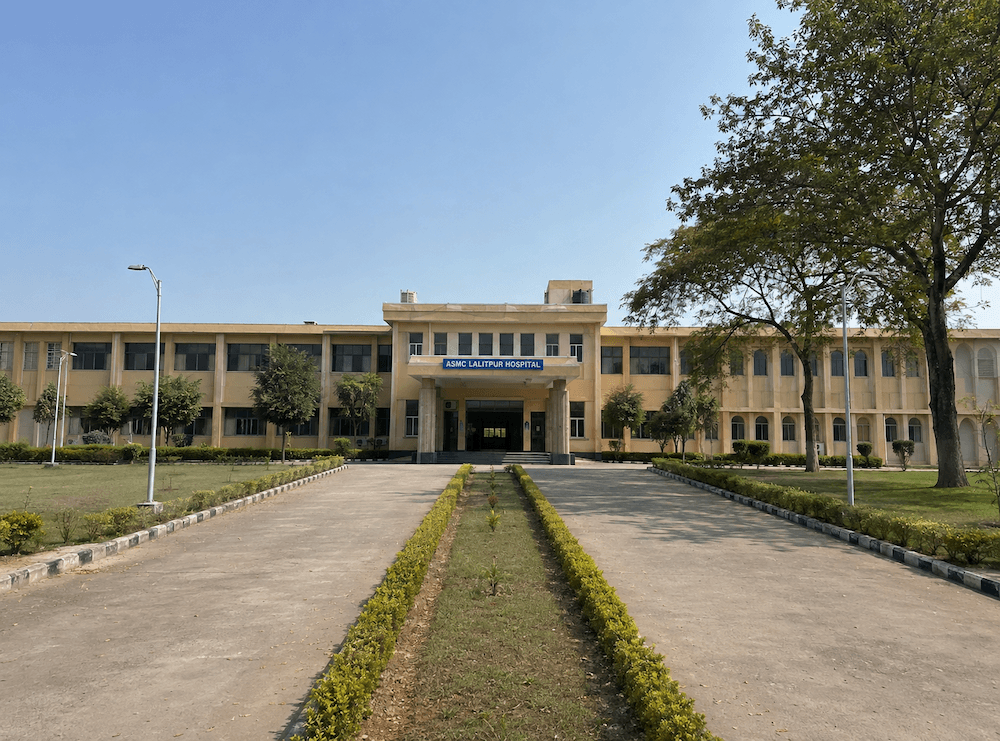
Quickly access institutional committees, submit academic or campus-related grievances, and explore welfare services created to support student safety, well-being and development.
Follow this structured process to submit your concern to the appropriate institutional committee and receive a fair, confidential and timely resolution.
Identify the concern you wish to report.
Choose the committee responsible for your concern.
Submit accurate details and relevant supporting documents.
Receive confirmation and your grievance reference number.
The committee reviews and resolves your grievance.
Track progress or request further institutional review.
Identify the category that best matches your concern so it can be directed to the appropriate committee or institutional authority.
Concerns related to teaching, attendance, curriculum or academic guidance.
Issues involving examinations, evaluations, results or assessment procedures.
Report accommodation, safety, cleanliness or campus management concerns.
Report inappropriate behaviour, discrimination, intimidation or unequal treatment.
Concerns related to documents, fees, records or institutional processes.
Issues involving student services, accessibility, facilities or welfare support.
Anatomy provides the structural foundation required to understand physical examination, medical imaging, injuries, surgical procedures and other clinical subjects.
The curriculum covers general anatomy, gross anatomy, histology, embryology, neuroanatomy, genetics, surface anatomy, radiological anatomy and clinically applied anatomy.
Students are assessed through theory examinations, practical exercises, spotters, viva examinations, internal assessments and regular faculty feedback according to academic regulations.
Yes. Supervised cadaveric dissection helps students observe anatomical structures directly and understand their positions, relationships and clinical significance.
Students learn through anatomical specimens, models, bones, charts, microscopes, histology slides, medical images and practical demonstrations.